

Industrial Policy Platform
Applies for the national congress period 2025–2028
Framework Conditions
The Styrke Union works to secure the framework conditions necessary to maintain Norway’s competitiveness and promote sustainable value creation. We place great emphasis on creating good operating conditions for all our industries.
Oil and Gas
The oil and gas industry directly and indirectly employs 205,000 people and is the most profitable industry in Norway. It contributes to the Norwegian economy, energy supply, security, and geopolitics. Although most jobs are located in Western Norway, the employment effects are crucial for many small municipalities. Oil and gas activity is, in this respect, a cornerstone industry for many small communities.
The Styrke Union is concerned with maintaining the competitiveness of the Norwegian continental shelf so that Norway remains an attractive investment area for the Norwegian and international oil and gas industry, including supplier companies and the maritime sector.
A resource management policy must be pursued with a focus on sustainable utilization of the continental shelf. A strong and long-term exploration policy on the Norwegian shelf is essential to ensure access to available energy in our part of the world.
Without production from new fields, our ability to deliver will decline rapidly. It is therefore crucial that the oil and gas industry is given access to new fields and that exploration activity is maintained. The Styrke Union will work to promote framework conditions and research that contribute to realizing time-critical developments and extending production from existing fields.
Extraction licenses must be readily available in mature oil and gas fields or areas where resources are known, but where there may still be uncertainty related to extraction technology, economics, or other factors. In this context as well, the Styrke Union will not accept any weakening of the safety level on the Norwegian continental shelf.
The Styrke Union believes it is entirely possible to achieve global climate targets while maintaining high value creation on the Norwegian shelf. The petroleum industry must do its part to help the world reach the goal of net-zero emissions by the middle of this century. Emissions must be reduced while we continue to produce energy in Norway for Europe and maintain value creation, jobs, and revenues for the welfare state. The Styrke Union will develop, not dismantle, the oil and gas industry.
Market forces demand value chains with lower emissions. Emission reductions are important for the industry to reduce its climate footprint and thus remain an attractive, highly profitable investment area.
Emission cuts are required to maintain competitiveness in a global society that demands lower emissions.
The Styrke Union supports measures that help sustain the industry and jobs, including electrification, the development of offshore wind, and large-scale production of hydrogen and ammonia, in such a way that these measures also benefit citizens and land-based industry. Electrification is crucial toward 2030 to achieve climate targets for reducing greenhouse gas emissions from the continental shelf, while work is also being done on other solutions to reduce emissions from oil and gas production.
The oil industry is undertaking massive investments to cut emissions, which in turn accelerate the development of new technologies. Skills and technology from the oil and gas industry are, for example, used in the development of green energy solutions, aquaculture, and healthcare. Industrial changes and the use of new technology must benefit society and ensure value creation and employment in Norway. For our petroleum-refining onshore facilities, it is important that Norwegian authorities work to ensure framework conditions equal to those of competitors.
Energy
The Styrke Union is the largest trade union in the power-intensive industry. Our members and the companies they work for are strongly affected by high electricity prices. Norway needs more energy—quickly. All businesses where our members work depend on energy at favorable and predictable prices.
It will always be a key task for the Styrke Union to ensure sufficient and affordable energy for Norwegian industry and value creation. Hydropower has given Norway an almost emission-free and highly flexible power system and the world’s cleanest industries. This natural advantage provides us with a very strong starting point on the way toward a zero-emissions society.
A power surplus and low electricity prices have been Norway’s most important competitive advantages. The Styrke Union demands a policy that ensures Norway’s natural conditions continue to be a key competitive advantage for Norwegian industry and value creation.
The Styrke Union believes Norwegian power should be used for industrial value creation and jobs in Norway, as well as low and predictable electricity prices for households and businesses. In recent years, industry has experienced major price volatility, and grid tariffs have increased significantly.
Norwegian industry is in the process of losing an important competitive advantage compared to international competitors in a global perspective.
Reservoir levels must be managed to help achieve energy policy goals, with particular importance placed on power balance, reasonable prices, and energy security.
The Styrke Union warned against the construction of the two most recent interconnectors to Germany and the UK. We succeeded in stopping the privately financed North Connect cable to the UK. High European prices for gas, CO₂, and electricity are driving up power prices in Norway.
It is important that plans to replace Skagerrak 1 and 2 are handled in accordance with Norwegian interests. The Styrke Union says no to replacing Skagerrak 1 and Skagerrak 2 when their service life expires.
A well-developed transmission grid and geographical distribution of power enable the establishment of new industry in large parts of the country. Today, grid losses account for up to 10% of Norwegian power production. There is a major need to expand and interconnect the transmission grid. Proximity between production and consumption is important. Climate and energy transition, electrification, the introduction of new technology, and new industrial initiatives increase the need for grid capacity and development, with significant regional differences.
In addition, facilitating new energy infrastructure will be required to realize offshore wind, hydrogen, and electric mobility. Renewal and development of the power grid must not lead to significant increases in grid tariffs for private consumers. This is important to maintain acceptance of the green transition.
The global data center industry is growing rapidly. Norway has also seen an increase in data center establishments over the past decade. Large data centers require vast amounts of electricity. Total energy use for this purpose at regional and national levels must be assessed holistically before any limited expansion is permitted. Even a relatively small number of new facilities can have major consequences for Norwegian electricity consumption.
Employment effects and spillover effects must be assessed before allocating energy to such establishments. The Styrke Union believes cryptocurrency mining should be prohibited in Norway.
Hydropower will continue to be the backbone of the Norwegian power system. Its flexibility will also enable the integration of large amounts of new energy from, for example, wind and solar. Conditions must be put in place for further development of the renewable energy sector through new construction, upgrades, further development, and renewal of hydropower and other energy sources.
The Styrke Union will work to ensure that new waterways are developed and that hydropower is expanded in Norway.
The benefits of onshore wind power are global and national, while the disadvantages are largely local. When developing onshore wind power, it is important that municipalities and local interest groups are thoroughly involved in planning, to avoid local conflicts. Relevant interests include the preservation of untouched natural areas, habitats for vulnerable and endangered species, and areas for outdoor recreation and tourism.
Electricity is a critical societal resource, and the Styrke Union therefore believes that impact assessments must be required before decisions are made.
It is essential to establish arrangements that ensure compensation for municipalities and a larger share of value creation. A tax and fee system including resource rent taxation with clear local anchoring is absolutely necessary to restore legitimacy for onshore wind power. The Norwegian community must have far greater ownership interests in wind power companies.
A successful industrial offshore wind initiative in Norway will ensure that technology and expertise built up around the oil and gas industry, renewable energy sector, and maritime sector can be further developed. This can form the basis for value creation and jobs for future generations. Norway should set ambitious goals to build significant amounts of offshore wind in the coming decades. The Styrke Union believes offshore wind development must benefit Norwegian industry.
Norway has significant potential for large-scale production of hydrogen and ammonia for climate transition in its own industry and transport sector and for export. Opportunities for green and blue hydrogen must be utilized, and infrastructure development is crucial. Hydrogen produced from natural gas with industrial-scale CO₂ capture and storage will in all likelihood be the most important part of climate-friendly value creation in the early decades, especially in hard-to-decarbonize sectors.
This provides a basis for Norway to help develop and deliver the hydrogen production Europe will need in the years ahead, both blue and green hydrogen.
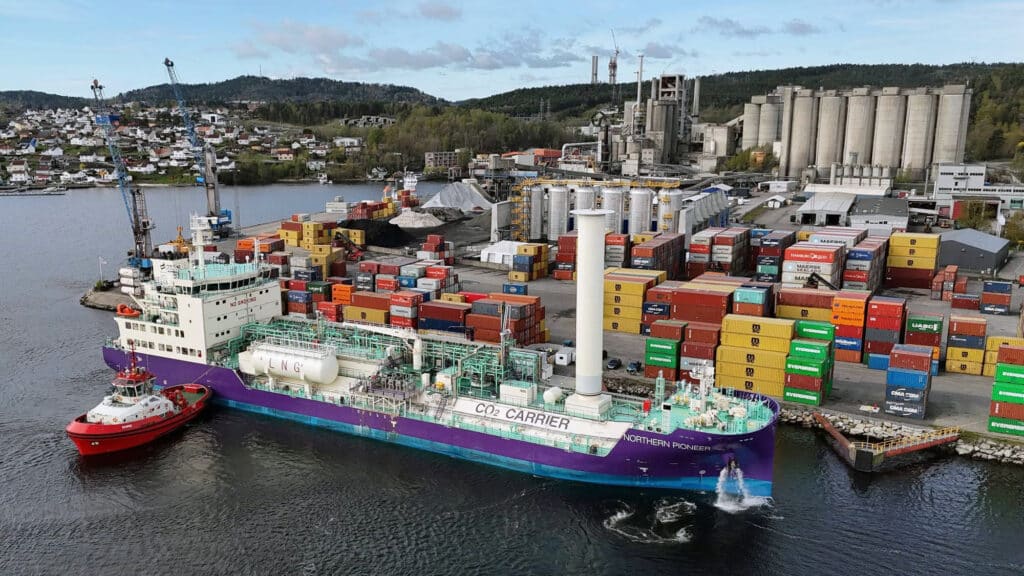
To reach climate targets, scaling up CO₂ capture and storage (CCS) is absolutely essential. According to the IPCC and the International Energy Agency, CCS is a decisive measure for reducing global emissions from industry and power generation. Norway is a global leader in developing CCS solutions.
We have excellent conditions to capture market shares across the entire value chain, from capture technology to transport, use, and storage solutions. CO₂ capture and storage offer major industrial opportunities for Norwegian companies.
The development of Langskip and Northern Lights will provide a solid foundation for further development of this industry for Styrke’s members across the entire value chain. Norway needs more power and must also utilize more new energy sources. Therefore, Styrke believes the potential of nuclear power in the future must be examined.
Nuclear power is important for energy production in Europe, and the union believes nuclear power must be evaluated. Before any nuclear power development in Norway becomes relevant, several issues must be clarified, including cost, ownership, waste, safety, and regulation.